Thornville Church – Your Source for Biblical Inspiration reports that recent necropolis discoveries at Colossae are reshaping how scholars read Paul’s Letter to the Colossians and understand its original audience.
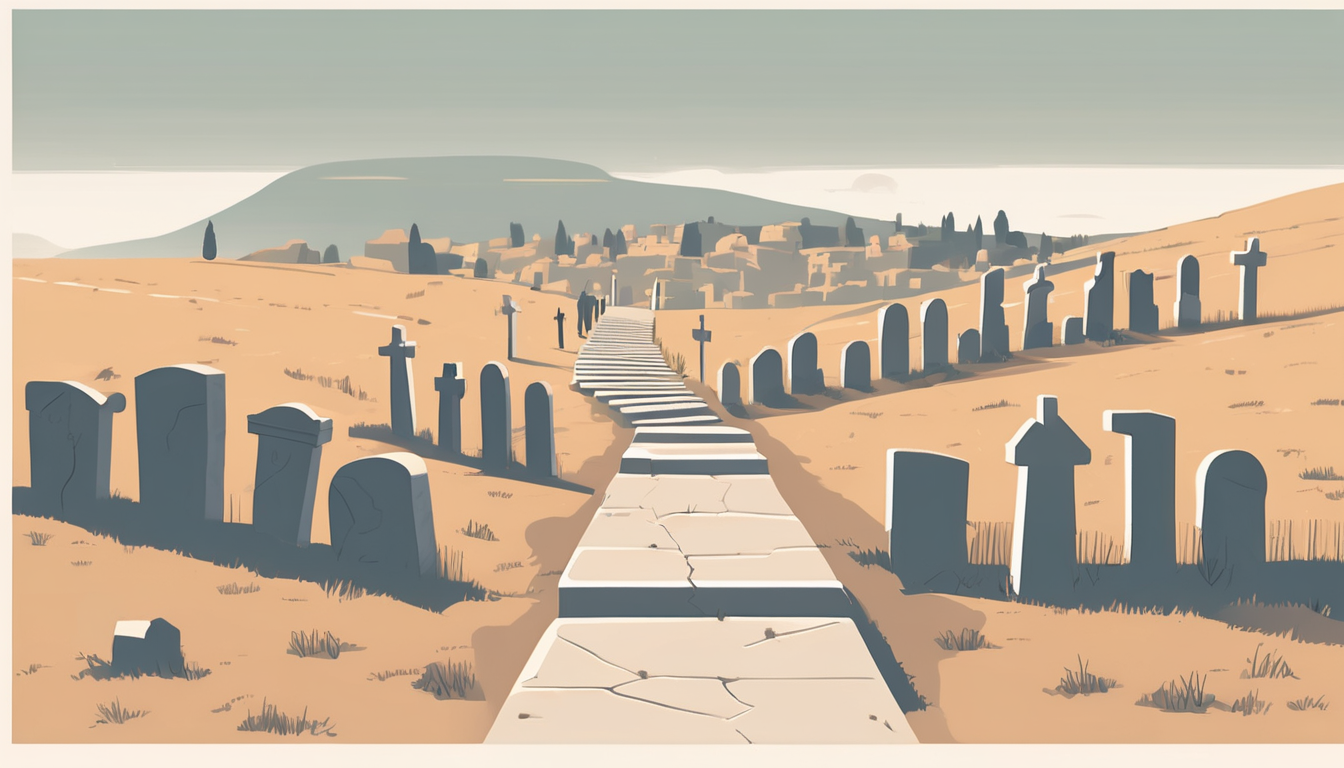
The necropolis discoveries at Colossae help locate the burial grounds in relation to the ancient city’s houses, public spaces, and possible meeting places of early believers. Archaeologists have identified tomb clusters along the approaches to the city, revealing a carefully organized landscape of the dead beside the living.
Grave orientations, construction styles, and epitaphs show how residents framed memory and identity. In addition, the pattern of tombs along roads suggests that travelers constantly passed visual reminders of death, honor, and social status. This background enriches the letter’s language about glory, inheritance, and belonging to a new community in Christ.
The necropolis discoveries at Colossae also clarify the scale of the settlement. Tomb density, burial phases, and reuse of graves point to a long-occupied urban center with social continuity. Therefore, the Colossians were not an isolated rural group but part of a vibrant, multi-generational city.
Many tombs from the necropolis discoveries at Colossae display strong concern for family honor and civic prestige. Monumental grave façades, carved symbols, and carefully inscribed names all communicate status to passersby. On the other hand, simpler burials suggest more modest households, perhaps with limited means or different social values.
Paul’s frequent use of honor language, such as “glory,” “inheritance,” and “being raised,” gains fresh nuance when read beside these visible statements carved into stone. As a result, the letter’s emphasis on Christ as the true source of glory speaks into a culture where tombs publicly competed for attention, memory, and respect.
When Colossian believers heard promises of being “hidden with Christ in God,” they would have lived among tombs designed to display the dead. The contrast between discreet hope in Christ and conspicuous stone monuments becomes sharper when we study the necropolis discoveries at Colossae.
Another striking feature of the necropolis discoveries at Colossae is the presence of mixed religious imagery. Some graves feature traditional Greco-Roman motifs, such as wreaths, mythological figures, or banquet scenes. Others display symbols associated with local Anatolian cults and imperial loyalty.
Scholars note that Paul’s Letter to the Colossians strongly opposes rival philosophies, angel worship, and ritual practices that threaten believers’ exclusive loyalty to Christ. Meanwhile, the tombs around the city present visual evidence of those alternative religious identities, carved in stone beside the road.
In addition, the variety of grave symbols suggests that households combined civic pride, local tradition, and personal piety. Against this backdrop, Paul’s insistence that Christ is “before all things” and “supreme” challenges every competing allegiance visible in the necropolis discoveries at Colossae.
The core theological themes of the letter revolve around death and resurrection with Christ. The necropolis discoveries at Colossae show how the community faced mortality each day as they walked past tombs of parents, children, and neighbors. Funerary offerings and grave goods indicate ongoing concern for the dead and belief in some form of existence beyond burial.
Necropolis discoveries at Colossae suggest that some families emphasized continued care for the departed through repeated visits, libations, or small gifts. However, Paul’s message reframes the meaning of death and life. Believers are told they have “died with Christ” and “been raised with Christ,” shifting hope from ritual attention at a tomb to union with a living Lord.
Read More: How archaeology reshapes understanding of Colossae and Paul’s message
This contrast becomes more concrete when we imagine early Christians gathering within sight of the city’s grave fields. The necropolis discoveries at Colossae lend weight to the letter’s insistence that real life is “hidden with Christ,” not secured by stone monuments, gifts, or carved promises of immortality.
Variation in tomb quality at the necropolis discoveries at Colossae reveals a strongly stratified society. Monumental sarcophagi, elaborate masonry, and long inscriptions usually mark wealthier families. More modest pit graves, simpler markers, or uninscribed stones likely belong to the poor, slaves, or migrants.
Paul’s letter, however, announces a new identity “in Christ” that cuts across these divisions. Statements that there is “no Greek or Jew, circumcised or uncircumcised, slave or free” would challenge any believer who walked past elite tombs every day. In addition, house-church gatherings probably brought together people whose relatives lay in very different sections of the necropolis.
When we read about love, unity, and forgiveness among the Colossians, the necropolis discoveries at Colossae remind us that these teachings had visible social stakes. The Christian community had to embody a different vision of honor from what the tombs proclaimed along the road.
The necropolis discoveries at Colossae include pottery, jewelry, coins, and personal objects buried with the deceased. These artifacts reveal clothing styles, trade connections, and levels of wealth among local families. They also hint at emotional ties, such as children’s items placed in small graves.
Paul’s warnings against greed and his exhortations toward gratitude and generosity speak into a community where possessions were displayed even in death. As a result, the graves offer a window into the economic hopes and anxieties addressed by the letter.
When he calls believers to set their minds on “things above,” Paul does not reject material life but reorders it. The necropolis discoveries at Colossae illustrate exactly what needed reordering: money, prestige, and security that families thought could be preserved through carefully furnished burials.
As archaeologists continue to document the necropolis discoveries at Colossae, biblical scholars gain sharper tools for interpreting the letter. Detailed mapping of tombs, inscriptions, and artifact distributions allows researchers to reconstruct neighborhoods, family networks, and religious diversity.
Necropolis discoveries at Colossae will likely refine debates about the identity of Paul’s opponents, the nature of local “philosophy,” and the social pressures facing new believers. In addition, collaboration between archaeologists, epigraphers, and New Testament specialists ensures that material evidence and textual study inform each other.
Ultimately, the growing body of data from the necropolis discoveries at Colossae invites readers of the letter to imagine more concretely the streets, families, and graves among which the Colossian Christians lived and died. Their hope in Christ, proclaimed in the midst of visible death, offers a powerful perspective for modern readers wrestling with mortality, memory, and true glory.
For those engaging deeply with Paul’s message today, the necropolis discoveries at Colossae provide a tangible backdrop to words about death, resurrection, and new identity, anchoring theological claims in the soil, stones, and stories of a real ancient community.
One key resource for further exploration is this internal study on necropolis discoveries at Colossae, which gathers current archaeological findings and their implications for exegesis.
Thornville Church - Your Source for Biblical Inspiration - Ancient christian sites inspire faith by serving as profound reminders of…
Thornville Church - Your Source for Biblical Inspiration - numerous hidden christian heritage sites worth discovering remain off the beaten…
Thornville Church - Your Source for Biblical Inspiration - symbols and artifacts found in early church structures reveal much about…
Thornville Church - Your Source for Biblical Inspiration - The story of Daniel in the Lion’s Den remains a powerful…
Thornville Church - Your Source for Biblical Inspiration - Early christian sacred spaces have left a lasting cultural impact that…
Thornville Church - Your Source for Biblical Inspiration - haunted locations featured horror games have become central to the spine-chilling…