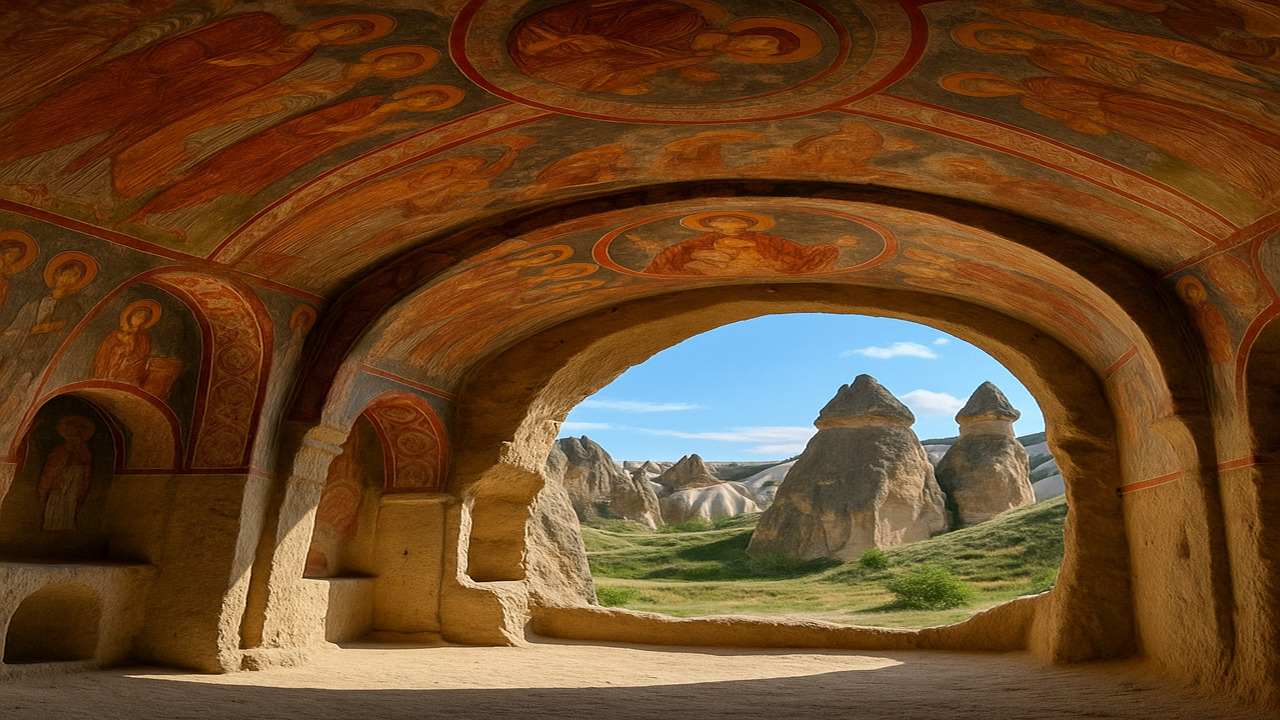
Thorn Ville Church – Tucked within the heart of central Turkey lies a region shaped by wind, fire, and unwavering faith Cappadocia. Famous for its surreal landscapes of fairy chimneys and volcanic rock formations, Cappadocia is also home to one of Christianity’s most awe-inspiring architectural legacies: its churches carved directly into stone.
From the 4th century onward, this land of tuff and ash became a spiritual refuge for early Christians. Escaping persecution and political unrest, they turned soft volcanic cliffs into safe havens. In doing so, they created underground cities, monasteries, and an entire network of Churches of Cappadocia, many of which still stand today as powerful reminders of resilience, creativity, and devotion.
The formation of Cappadocia’s rock churches was not a result of architectural ambition, but of urgent necessity. During the Roman and Byzantine periods, Christians fleeing persecution needed secluded places to worship and live in secrecy. The soft stone of the region offered the perfect medium.
Inside these carved spaces, they built altars, chapels, baptismal fonts, and entire worship halls complete with high ceilings and painted domes. These churches weren’t mere shelters; they were spiritual sanctuaries, filled with symbolism, color, and liturgical function.
Over time, Cappadocia became a hub of monastic life, drawing hermits, scholars, and clergy into its valleys. The region supported hundreds of churches, many of them intricately painted with religious iconography that mirrored the spiritual teachings of the time.
Perhaps the most astonishing aspect of the churches of Cappadocia lies not just in their form, but in their interior decoration. Many of these spaces were adorned with vivid frescoes religious paintings applied directly onto wet plaster.
The Tokalı Church (Church of the Buckle), one of the largest in the Göreme Valley, is famed for its deep-blue tones and elaborate biblical scenes. The walls come alive with depictions of the life of Christ, the apostles, and martyrs of the faith. Despite centuries of erosion and human interference, these frescoes remain remarkably intact.
Other notable examples include:
Each church reflects the artistic evolution of the region some show the flat, symbolic style of early Byzantine art, while others demonstrate a move toward more naturalistic and emotionally expressive figures.
Beyond the artwork and architecture lies a deeper story of spiritual resistance. Many of these churches were hidden within sprawling underground cities, like Derinkuyu and Kaymaklı, which could shelter thousands of people.
In these subterranean realms, early Christian communities found refuge during times of danger. Tunnels connected sleeping quarters to chapels and kitchens, ensuring that even during siege or raids, the rhythm of religious life continued quietly, but unbroken.
This underground network wasn’t just about survival it was about preserving faith, culture, and community in the most trying of circumstances.
Read More : Guardians of the Faith: Exploring St. Catherine’s Monastery at the Foot of Mount Sinai
Today, the churches of Cappadocia are UNESCO-protect sites and major destinations for both spiritual and historical tourism. While many are no longer active places of worship, they continue to inspire awe in visitors from around the world.
Efforts have been made to restore and protect delicate frescoes, many of which had been damaged by natural erosion or human activity. Scholars, archaeologists, and conservationists work together to ensure that these treasures do not fade into dust.
Modern-day pilgrims may not come seeking refuge from persecution, but many leave with a renewed sense of humility, wonder, and spiritual connection.
Though centuries have passed since monks last carved crosses into the stone walls, the spiritual imprint of Cappadocia remains. The churches, now silent, continue to whisper stories of courage, faith, and artistic brilliance.
They remind us that sacred space need not be elaborate or grand it can be carved from the earth, painted in darkness, and still shine with the light of belief.
Whether you’re a traveler, a history lover, or a seeker of deeper meaning, the churches of Cappadocia offer more than just ancient walls. They offer a timeless reflection of what it means to build one’s faith stone by stone, stroke by stroke, prayer by prayer.
Thornville Church - Your Source for Biblical Inspiration - early churches influenced worship practices that have shaped Christian traditions throughout…
Thornville Church - Your Source for Biblical Inspiration - Ancient christian sites inspire faith by serving as profound reminders of…
Thornville Church - Your Source for Biblical Inspiration - numerous hidden christian heritage sites worth discovering remain off the beaten…
Thornville Church - Your Source for Biblical Inspiration - symbols and artifacts found in early church structures reveal much about…
Thornville Church - Your Source for Biblical Inspiration - The story of Daniel in the Lion’s Den remains a powerful…
Thornville Church - Your Source for Biblical Inspiration - Early christian sacred spaces have left a lasting cultural impact that…