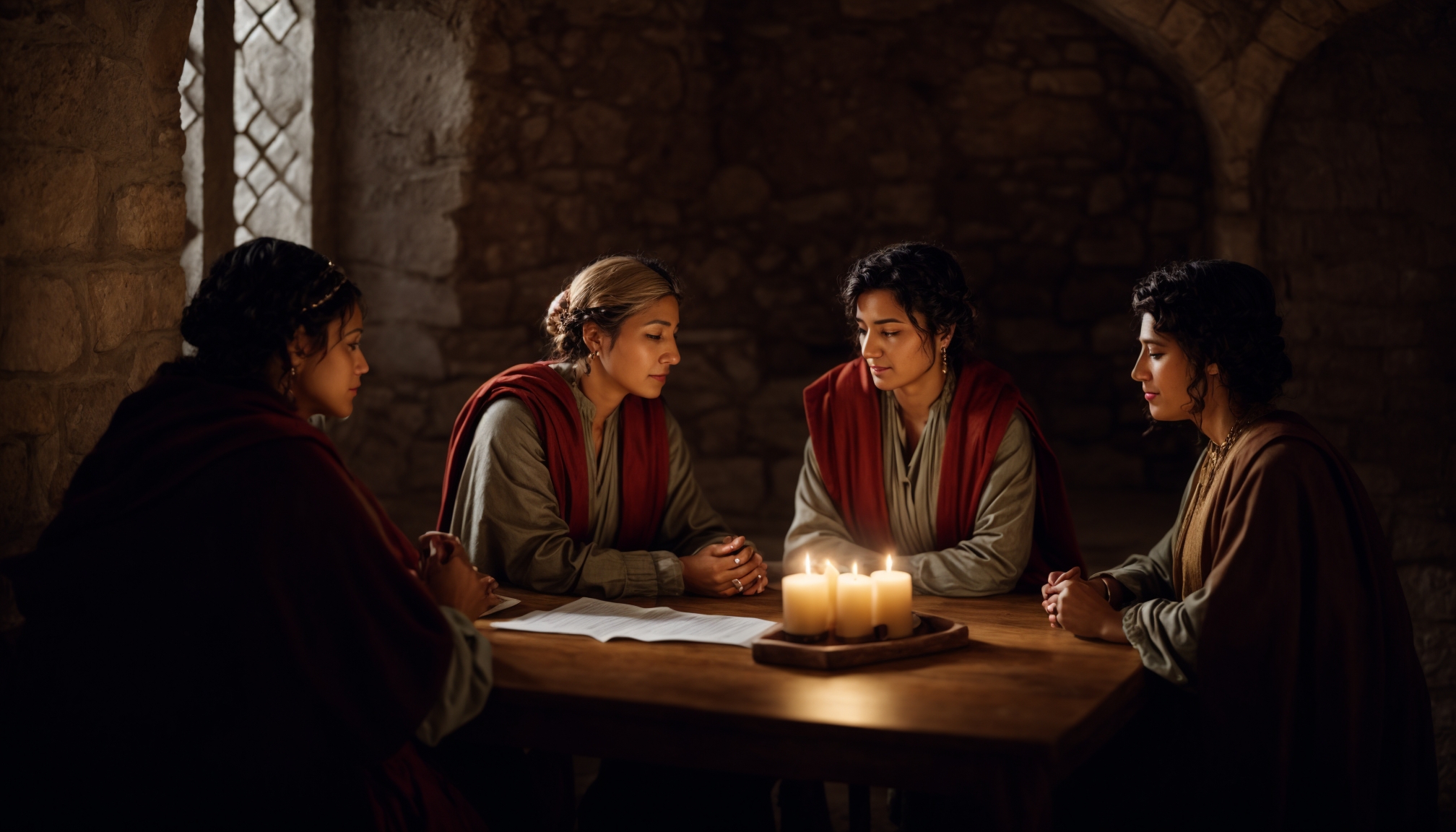
Thornville Church – Your Source for Biblical Inspiration – Historians now highlight how women in early church shaped theology, leadership, and daily Christian life in ways long overlooked.
For centuries, official church narratives sidelined women in early church. Male bishops, emperors, and theologians filled the spotlight. However, archaeological finds, letters, and inscriptions now reveal a more complex picture. Women hosted communities, funded missions, and sometimes held recognized titles.
Several New Testament texts already hint at this role. Paul mentions Phoebe, Priscilla, Junia, and many others. These names show that women in early church were not silent observers. They prayed, taught, traveled, and risked their lives. As a result, the spread of Christianity relied heavily on their networks and courage.
Socially, most women lacked formal power. On the other hand, the house-church model created new space. Homes became worship centers, and the one who controlled the household held influence. Consequently, wealthy widows and household heads gained particular authority inside Christian groups.
The Gospels already present key portraits of women in early church origins. Women stood at the cross when many male disciples fled. They went to the tomb first. According to several Gospel accounts, they were the first witnesses of the resurrection. Therefore, they carried the central Christian message before any apostolic sermon.
Paul’s letters add more insight. He calls Phoebe a “diakonos” of the church at Cenchreae and a “prostatis,” or patron, to many. This suggests both ministry and financial leadership. Meanwhile, Priscilla and Aquila teach the learned preacher Apollos. Strikingly, Priscilla’s name often appears first, hinting at prominence.
Junia is another important case. Paul greets her as “outstanding among the apostles.” Later copyists and interpreters debated her name and gender. Nevertheless, early evidence supports her as a female apostle. These examples show that women in early church held roles later restricted.
In the first three centuries, most Christians met in homes. Because of that, domestic space shaped governance. The person who owned or controlled the house mediated access, hospitality, and gatherings. Often that person was a woman. Wealthy widows in particular appear as major patrons.
Inscriptions and letters record women as “deaconesses,” “widows,” and even “presbyteras” in some regions. Scholars debate what these titles meant. Even so, they signal recognized ministry. Women in early church supported missionaries, hosted councils, and organized charity for the poor.
Read More: Historical overview of Christianity and its early development
The theology of charity and hospitality also empowered these women. Caring for orphans, the sick, and travelers required resources and management. Women coordinated these tasks. Therefore, the moral credibility of the community often relied on women in early church who embodied mercy and practical wisdom.
Persecution created another arena where women in early church shaped memory. Texts tell of Perpetua, Felicity, and other martyrs who faced execution with public courage. Their trial accounts show them speaking boldly to governors and crowds. These stories inspired later generations and influenced ideas of sanctity.
After imperial persecution eased, a new heroic model emerged. Men and women retreated to deserts and remote places. They sought radical devotion through prayer, fasting, and simplicity. The “Desert Mothers” counseled visitors, healed conflicts, and guided monks. Some sayings from these women survive alongside those of Desert Fathers.
These ascetic women often challenged social expectations. They refused marriage, wealth, and domestic roles. Because they lived outside normal structures, they gained spiritual authority. Women in early church monastic circles could advise bishops, interpret visions, and critique corrupt leaders.
Over time, institutionalization changed the landscape. As bishops gained power and liturgy moved from homes to dedicated buildings, authority narrowed. Clerical offices became more formal and exclusively male. Consequently, many contributions of women in early church faded from official memory.
Church councils and writers began to regulate women’s presence. Some praised virgins and widows but excluded them from sacramental leadership. Others emphasized silence and submission. Nevertheless, inscriptions still hint at local exceptions. In some cities, families commemorated women as leaders and benefactors.
Because of these mixed signals, historians now reassess sources carefully. They compare official decrees with everyday evidence. This method reveals tension between central rules and local practice. In daily life, women in early church likely continued to teach, host, and organize long after laws tried to curtail them.
Modern scholarship, archaeology, and fresh readings of old texts now recover many forgotten names. Researchers trace burial sites, study early art, and retranslate inscriptions. They spot female figures once misread as male or anonymous. As a result, the map of early Christianity looks more diverse.
Church communities today also draw insight from these stories. Remembering women in early church broadens the sense of heritage. It shows that Christian beginnings involved complex cooperation, not a single pattern. Pastors, teachers, and lay believers use these stories to question narrow assumptions.
Furthermore, these memories foster accountability. When communities know that women once preached, funded, and governed, current debates over service and calling gain deeper context. Discussions move beyond abstract theory. They connect with concrete lives of women in early church who endured risk and opposition.
One way to keep these stories alive is through teaching and public writing. Digital archives, church courses, and local study groups can feature biographies and sources. Linking to dedicated resources, such as women in early church, helps readers find focused material and continue exploring lesser-known figures.
Ultimately, recovering these voices does not erase other parts of history. Instead, it completes a partial record. It honors the full body of believers that shaped the faith. By listening again to the courage and wisdom of women in early church, communities today gain a richer, more honest memory and a more hopeful vision for shared leadership.
Thornville Church - Your Source for Biblical Inspiration - early churches influenced worship practices that have shaped Christian traditions throughout…
Thornville Church - Your Source for Biblical Inspiration - Ancient christian sites inspire faith by serving as profound reminders of…
Thornville Church - Your Source for Biblical Inspiration - numerous hidden christian heritage sites worth discovering remain off the beaten…
Thornville Church - Your Source for Biblical Inspiration - symbols and artifacts found in early church structures reveal much about…
Thornville Church - Your Source for Biblical Inspiration - The story of Daniel in the Lion’s Den remains a powerful…
Thornville Church - Your Source for Biblical Inspiration - Early christian sacred spaces have left a lasting cultural impact that…