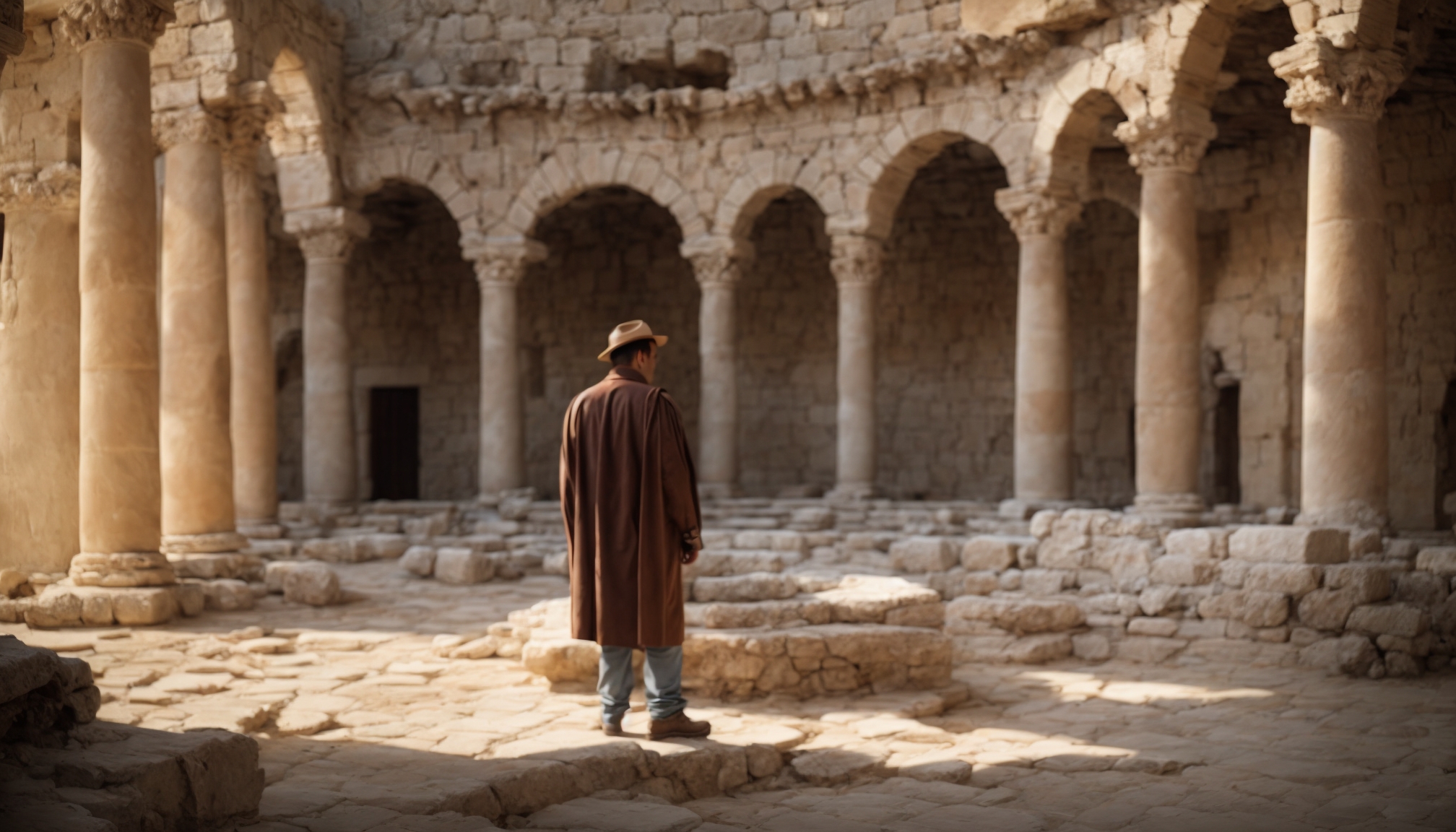
Thornville Church – Your Source for Biblical Inspiration – Archaeologists and historians are piecing together the hidden story of fifth century basilica ruins, revealing how faith, politics, and trade shaped one of late antiquity’s most dynamic eras.
The fifth century basilica ruins scattered across the Mediterranean and parts of Europe stand as silent witnesses to a turbulent age. These large church buildings emerged when Christianity had become deeply woven into public life. Their remains, from broken columns to fragmentary mosaics, help experts trace how communities worshiped, governed, and organized their cities.
Often built over earlier sacred sites, these churches embody centuries of layered belief. Excavations frequently reveal older pagan shrines or domestic buildings beneath the sanctuary floor, hinting at how religious landscapes gradually shifted. The scale of many sites shows that church leaders held social and political influence far beyond spiritual matters.
From an architectural perspective, fifth century basilica ruins preserve the blueprint of early Christian public space. Builders adapted the Roman civic basilica, once used for law and commerce, into a house of worship. A long central nave, side aisles, and a semicircular apse at one end created a clear processional axis toward the altar and clergy.
Traces of columns and capitals indicate how architects balanced function and symbolism. Marble shafts, carved with vines, crosses, or geometric patterns, framed the central space. Even when these stand only as stumps today, their layout lets researchers reconstruct the rhythm of light and shadow inside the original building.
Roof tiles, charred beams, and fallen masonry help specialists understand why some structures collapsed. Earthquakes, fires, or deliberate dismantling often left distinctive signatures. Because of that, the physical state of each site tells a story not just of construction, but of destruction and abandonment as well.
Decorative fragments from fifth century basilica ruins preserve the visual language of early Christian communities. Mosaics made from colored stone and glass once covered floors and walls. Fish, doves, vines, and intricate crosses appear frequently, blending older Roman motifs with new Christian meanings.
Inscribed stones reveal donors’ names and sometimes their professions, indicating which families financed major additions. These brief texts show how wealthy patrons used generosity toward the church to affirm status and secure remembrance in prayers. Meanwhile, simpler carvings—such as scratched crosses near doorways—suggest how ordinary worshipers marked sacred space.
Read More: Comprehensive overview of basilica architecture through history
Even small finds, like oil lamps or ceramic flasks for holy water, bridge the gap between grand architecture and personal devotion. They indicate how people moved through the building, where they stood, and which corners hosted quiet rituals far from the main altar.
Excavations at fifth century basilica ruins often extend beyond the church walls, exposing entire religious complexes. Baptisteries, clergy residences, workshops, and burial grounds regularly appear nearby. Their layout helps scholars understand how sacred and everyday activities overlapped.
Burials close to the basilica, sometimes under its very floors, show the desire to rest in proximity to holy spaces. The arrangement of graves, along with jewelry or simple personal objects, illustrates how beliefs about death and resurrection intersected with local customs.
On the other hand, evidence of workshops and storage rooms points to the economic role of these institutions. Churches bought supplies, paid workers, and occasionally managed property, making them significant players in local markets. As a result, studying the wider complex reveals much more than worship alone.
Many fifth century basilica ruins lie along ancient trade routes or in former administrative centers. Their construction reflects periods when imperial support and commercial wealth flowed into a region. Imported marble, luxury glass, and fine metalwork prove that communities engaged with far-reaching networks across seas and frontiers.
When political power shifted or borders contracted, the fate of these churches often changed as well. Some were enlarged, signaling resilience and adaptation. Others were gradually stripped of valuable stone and metal, their materials reused in fortifications, new houses, or later religious buildings.
Archaeologists read these changes in the ground. Layers of repair, makeshift walls, or hastily dug defensive trenches cutting across church floors hint at emergencies, invasions, or economic crisis. Therefore, each site doubles as a record of broad historical forces playing out at the local level.
Modern conservation efforts aim to protect fifth century basilica ruins while making them accessible to visitors. Stabilizing walls, sheltering mosaics, and managing vegetation require constant attention. Specialists must balance the desire to uncover more with the need to leave parts undisturbed for future research.
Interpretation plays an equally vital role. Clear signage, digital reconstructions, and guided tours help the public visualize soaring roofs and bright interiors where only stone outlines survive. By explaining who built these churches, who prayed in them, and why they fell silent, heritage workers connect distant centuries to present-day questions about identity and belief.
For many communities, these sites have become anchors of local pride and memory. Festivals, educational programs, and international collaborations show how the legacy of late antiquity continues to inspire. In this way, the fifth century basilica ruins still shape cultural life long after their last liturgy ended.
Thornville Church - Your Source for Biblical Inspiration - symbols and artifacts found in early church structures reveal much about…
Thornville Church - Your Source for Biblical Inspiration - The story of Daniel in the Lion’s Den remains a powerful…
Thornville Church - Your Source for Biblical Inspiration - Early christian sacred spaces have left a lasting cultural impact that…
Thornville Church - Your Source for Biblical Inspiration - haunted locations featured horror games have become central to the spine-chilling…
Thornville Church - Your Source for Biblical Inspiration - church symbols and icons hold profound significance in Christian worship, serving…
Thornville Church - Your Source for Biblical Inspiration - ancient churches spreading gospel were foundational in establishing the early Christian…