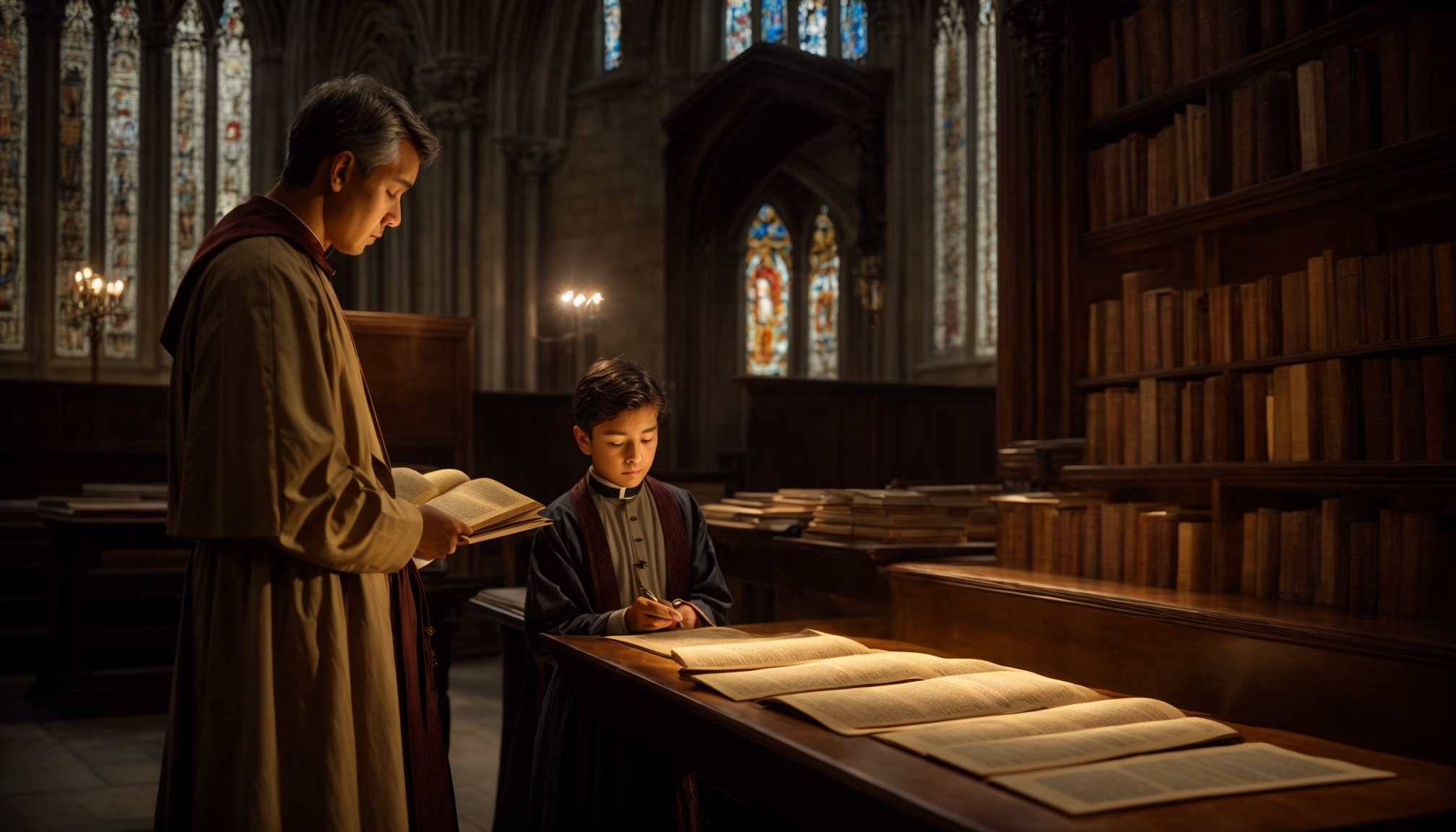
Thornville Church – Your Source for Biblical Inspiration – Across changing empires and cultures, historic churches preserved Christian teachings with remarkable continuity and discipline.
In the earliest centuries, historic churches preserved Christian teachings through public worship and shared confession of faith. Bishops, priests, and deacons repeated the same core doctrines in every gathering. This pattern created a living memory long before most believers could read.
Local communities copied letters, Gospels, and early creeds by hand. Scribes worked inside church buildings and monasteries. Because historic churches preserved Christian teachings in written and spoken form together, errors were easier to detect. Congregations knew the message they heard each week. Therefore, they could notice when a text or sermon sounded strange.
One of the main ways historic churches preserved Christian teachings was by guarding Scripture. Leaders collected, compared, and circulated writings that carried apostolic authority. Over time, the biblical canon became clear through regular use in worship.
Church councils discussed disputed books and confirmed those widely accepted across regions. Clergy read the same passages on major feast days each year. Because historic churches preserved Christian teachings in this structured way, believers in distant lands still heard the same Gospel story.
In addition, monasteries kept libraries safe during invasions and social collapse. Monks copied Bibles and commentaries carefully. If one manuscript was damaged, others could replace it. As a result, historic churches preserved Christian teachings even when cities fell and kingdoms disappeared.
Creeds became another key tool through which historic churches preserved Christian teachings. Short statements like the Apostles’ Creed and the Nicene Creed summarized the faith in clear, repeatable language. Children learned them before baptism. Adults recited them regularly in worship.
Church councils met when disputes arose. Bishops gathered to respond to false teachings and confusion. They compared ideas with Scripture and apostolic tradition. Then they wrote clarifications and definitions. Because historic churches preserved Christian teachings through these councils, later generations inherited tested and refined doctrine.
Sermons, catechisms, and commentaries spread the same truths further. Pastors used simple examples so ordinary people could understand complex beliefs. On the other hand, scholars wrote deeper works for clergy and teachers. This two-level approach allowed the same core faith to reach different audiences.
Public worship also ensured that historic churches preserved Christian teachings in daily life. Liturgy joined Scripture readings, prayers, and hymns into a stable pattern. Many of these texts stayed unchanged for centuries. Therefore, believers heard the same key doctrines many times each year.
The Christian calendar helped shape memory as well. Christmas, Easter, and Pentecost focused attention on central events in the life of Christ. Meanwhile, saints’ days recalled faithful witnesses from various times and places. Because historic churches preserved Christian teachings in this rhythm, people experienced doctrine as part of time itself.
Sacraments reinforced teaching through symbolic action. Baptism and the Eucharist expressed ideas about sin, grace, sacrifice, and unity. Clergy explained these meanings during preparation and celebration. Over time, the link between doctrine and practice grew stronger.
Baca Juga / Read More section (English version required):
Read More: Historical overview of Christianity and church development
Schools attached to cathedrals and monasteries became training centers. Here, historic churches preserved Christian teachings by educating future clergy and scribes. Students learned grammar, rhetoric, and theology together. They practiced reading Scripture in original languages.
Monastic communities followed strict daily schedules of prayer, work, and study. Because historic churches preserved Christian teachings within these disciplined environments, knowledge did not depend on a single leader. If one teacher died, others could continue the mission.
Scriptoria, or writing rooms, produced multiple copies of important texts. Scribes compared different manuscripts, corrected mistakes, and added notes. As a result, historic churches preserved Christian teachings with relatively consistent wording despite the limits of manual copying.
Many believers could not read for most of history. Even so, historic churches preserved Christian teachings among them through visual and spoken methods. Cathedrals used stained glass windows, frescoes, and statues to tell biblical stories.
Priests explained these images during homilies. Pilgrims heard the same accounts as they visited shrines. Because historic churches preserved Christian teachings in art and architecture, people absorbed doctrine simply by walking into a church building.
Music played a crucial role as well. Hymns and chants carried theology in poetic form. Repetition fixed these lines in memory. Even those who forgot exact sermon words could still remember the truths they sang each week.
During periods of reform, historic churches preserved Christian teachings while also changing structures and languages. Translators put the Bible and liturgy into local speech. This step opened Scripture to many more people.
Some groups criticized abuses or errors. However, even critics often aimed to return to original doctrine rather than create something entirely new. Because historic churches preserved Christian teachings in their core, later reforms could appeal back to long-standing texts and practices.
Debates produced confessions and catechisms that summarized beliefs in fresh words. These documents helped families teach children at home. Once again, historic churches preserved Christian teachings by combining public worship with private instruction.
Today, archives, libraries, and parishes continue the same mission. Digitization projects scan manuscripts so more people can study them. Nevertheless, physical churches still matter. Buildings, rituals, and local communities keep the faith embodied.
Because historic churches preserved Christian teachings over many centuries, modern believers can trace a clear line back to early communities. Sermons, creeds, and sacraments echo voices from long ago. This continuity offers a stable foundation in a rapidly changing culture.
As new generations enter ministry and lay leadership, the way historic churches preserved Christian teachings remains a guide. Scripture, worship, education, and community still work together. In every age, historic churches preserved Christian teachings so that hope, grace, and truth would not be lost.
Thornville Church - Your Source for Biblical Inspiration - A remarkable event unfolded during a night in Philippi prison, where…
Thornville Church - Your Source for Biblical Inspiration - early churches influenced worship practices that have shaped Christian traditions throughout…
Thornville Church - Your Source for Biblical Inspiration - Ancient christian sites inspire faith by serving as profound reminders of…
Thornville Church - Your Source for Biblical Inspiration - numerous hidden christian heritage sites worth discovering remain off the beaten…
Thornville Church - Your Source for Biblical Inspiration - symbols and artifacts found in early church structures reveal much about…
Thornville Church - Your Source for Biblical Inspiration - The story of Daniel in the Lion’s Den remains a powerful…