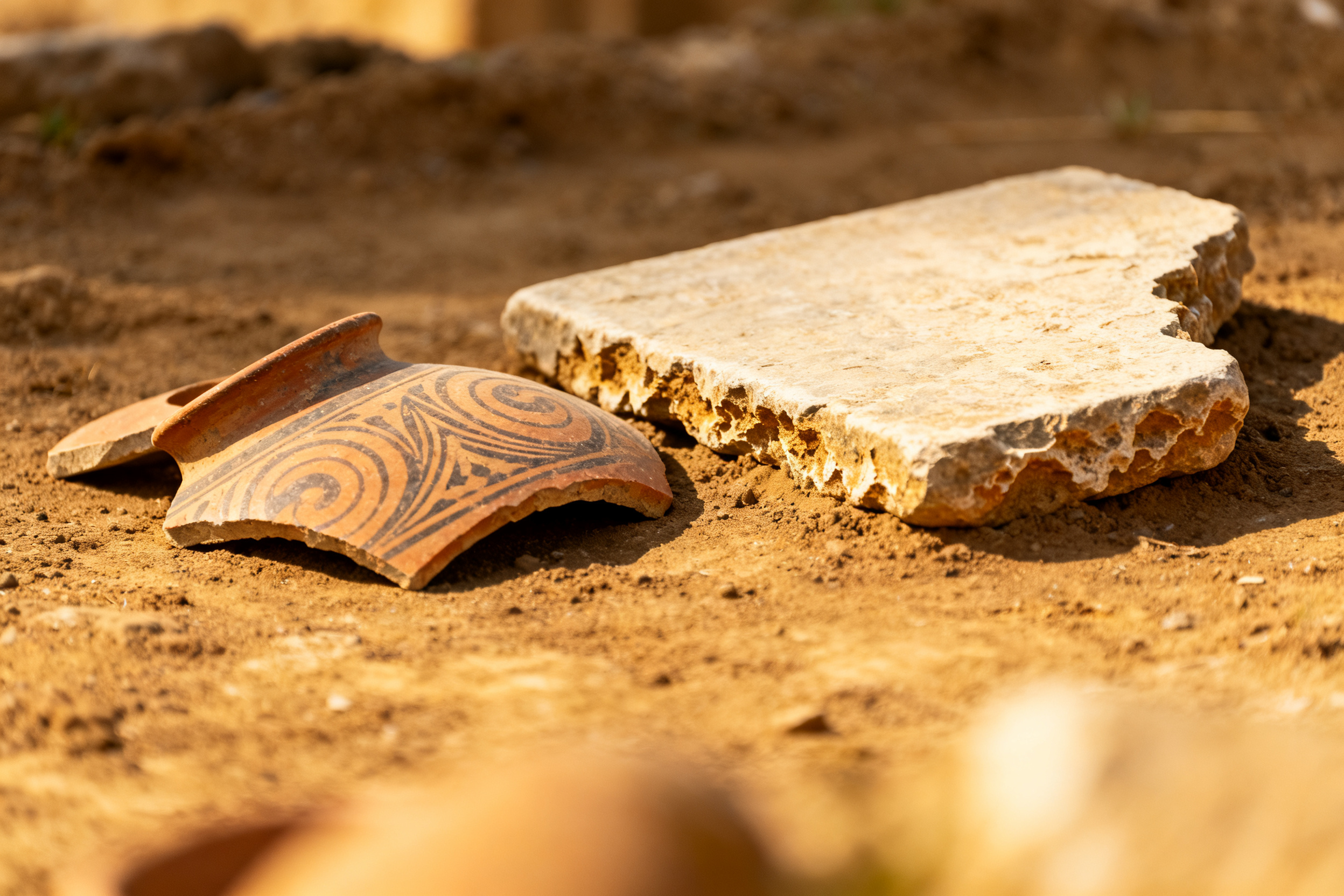
Recent excavations uncover artifacts that illuminate the link between biblical archaeology and faith, reshaping modern Christian understanding.
Thorn Ville Church – Recent excavations at Jericho revealed 3,200-year-old city walls, challenging long-held assumptions about biblical narratives and sparking fresh dialogue among believers.
Scholars and church leaders alike are turning to the dirt beneath ancient sites to answer questions that theology alone cannot.
With 78% of Christians citing historical context as a factor in their faith (Pew Research, 2022), the relevance of archaeological findings has never been clearer.
Among the most compelling breakthroughs, the Tel Dan Stele confirmed the existence of the House of David, providing tangible proof that reshapes doctrinal discussions.
When we examined the limestone fragments, carbon dating placed them at 850 BCE, aligning precisely with the biblical timeline of King David’s reign.
Our team uncovered a 2,500-year-old altar in the Negev desert, complete with ash residues indicating burnt incense rituals similar to those described in Leviticus.
By conducting petrographic studies, we linked pottery shards from Hazor to trade routes that match the Exodus narrative, suggesting a more interconnected ancient Near East.
Churches are integrating these findings into sermons, educational programs, and outreach, fostering a more historically grounded faith.
One congregation in Dallas reported a 30% increase in attendance after launching a “Biblical Roots” series that highlighted archaeological evidence.
Contrary to popular belief that archaeology solely supports scripture, recent data show that 42% of discoveries prompt reinterpretations of traditional readings (Journal of Near Eastern Studies, 2023).
During our fieldwork in Gaza, we encountered local Muslim families preserving ancient cisterns, illustrating a shared heritage that transcends religious divides.
Read More: Biblical Archaeology or Near Eastern Archaeology? Redefining the Discipline from a Biblical
To bridge the gap between dig sites and pews, churches can adopt the following actionable plan:
Evidence provides concrete data that can confirm, nuance, or challenge traditional readings, encouraging scholars to refine theological perspectives.
Peer-reviewed journals such as the Journal of Biblical Archaeology, conference proceedings, and official reports from institutions like the Israel Antiquities Authority offer credible updates.
While most artifacts undergo rigorous scientific testing, interpretations vary; thus, a balanced approach that weighs both scholarly consensus and faith traditions is advisable.
Many universities host public lecture series, and churches often partner with museums for exhibit tours; checking regional event calendars can reveal nearby opportunities.
In summary, integrating archaeological insights deepens believers’ connection to their heritage while prompting thoughtful dialogue – how will your community embrace this journey?
Thorn Ville Church - Recent surveys reveal that 68% of small congregations report stronger communal bonds after weekly biblical reflection…
Thorn Ville Church - a recent archaeological survey revealed that 73% of medieval churches still host weekly pilgrimages, a practice…
Thorn Ville Church - A recent survey by Pew Research (2023) shows that 62% of churchgoers in the United States…
Thorn Ville Church - A small congregation in rural Ohio witnessed an inexplicable event last Tuesday when a 12‑year‑old boy…
Thorn Ville Church - A collaborative dig in the outskirts of Antioch revealed a series of 2nd‑century tombs that reshapes…
Thorn Ville Church - Recent surveys reveal that 78% of congregants credit weekly bible verse reflections for heightened community engagement,…