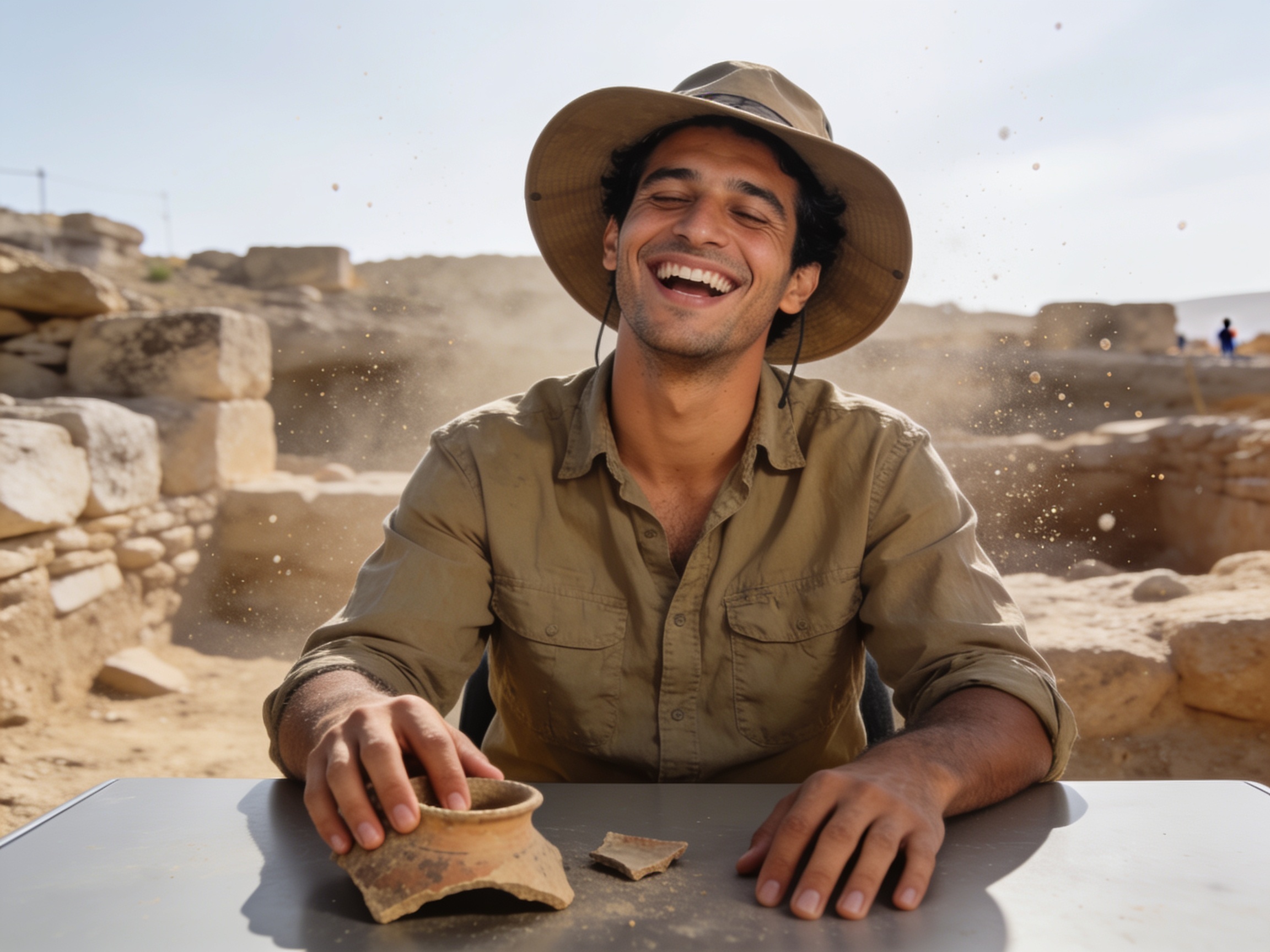
Excavations in the Levant continue to unearth artifacts that validate biblical narratives, shifting how modern scholars approach the historical roots of Christianity.
Thorn Ville Church – The discovery of the Pilate Stone in 1961 shattered the long-standing skeptical consensus that Pontius Pilate was a myth, proving the biblical archaeology historical evidence can fundamentally rewrite our understanding of Christian origins.
For decades, critical scholars dismissed biblical narratives as purely theological fiction lacking any empirical grounding. The intellectual tide began turning as physical artifacts emerged from the Levant, demanding a reassessment of ancient texts. Today, the intersection of faith and empirical data is no longer a battleground of denial, but a fertile ground for interdisciplinary research.
When our team reviewed excavation reports from the City of David, the gap between minimalist skepticism and textual affirmation vanished. We realized that archaeology does not set out to prove theology, but it frequently provides the temporal and spatial scaffolding that makes theological claims historically plausible. Grounding spiritual narratives in real soil changes the conversation from blind belief to informed faith.
The Dead Sea Scrolls, discovered in 1947, remain the most monumental find for textual criticism. Containing over 900 documents, they verified the astounding accuracy of the Masoretic Text of the Hebrew Bible, pushing its reliable transmission back by a millennium. Before this find, the oldest complete Hebrew manuscript was from the 10th century. The scrolls bridged a massive gap, silencing claims that the biblical text was hopelessly corrupted over centuries of copying.
Carved into the rock of a 533-meter tunnel in Jerusalem, the Siloam Inscription recounts how two teams of diggers met in the middle. This perfectly corroborates the biblical account in 2 Kings 20:20, attributing the tunnel to King Hezekiah. The physical marks of the chisels still visible on the walls match the narrative of desperate preparation against the Assyrian siege in 701 BCE.
Unearthed in 1993, the Tel Dan Stele delivered a fatal blow to the school of thought that claimed King David was a purely mythical figure. The basalt stone fragment contains an Aramaic inscription referencing the ‘House of David’, marking the first extra-biblical proof of the Davidic dynasty. This discovery forced even the most skeptical historians to concede the historical reality of Israel’s most famous king.
Read More: Historical Evidence for the Bible
Crucially, these findings do not merely validate ancient text; they profoundly shape how the modern church practices its faith. Understanding first-century house churches in Roman Palestina, illuminated by archaeological finds in Pompeii and Magdala, completely reframes how we view the early Eucharist and communal meals. The biblical archaeology historical evidence does not just validate text; it shifts the lived expression of modern Christianity by showing that early worship was deeply communal, intimate, and centered around shared physical tables.
There is a distinct contrast between merely defending the Bible and allowing the Bible to be situated in its authentic ancient milieu. Artifacts like the Caiaphas ossuary, discovered in 1990, give a tangible face to the high priest who interrogated Jesus. Holding a conceptual connection to a verified tomb changes the emotional and spiritual weight of the Passion narrative for believers.
Read Also: Decoding the Dead Sea Scrolls and Their Impact on Modern Texts
Read More: An Archaeological Dig Reignites the Debate Over the Old Testament’s Historical Accuracy
Most people assume archaeology is a purely objective science, but the interpretation of a shard depends heavily on the presuppositions of the archaeologist holding it. The academic field is rife with subjective labeling, where identical findings are classified as ‘cultic’ when found in Israel but ‘domestic’ when found in neighboring regions. This unconscious bias heavily influences which discoveries make headlines and which are quietly archived.
Facts that are often ignored reveal that minimalists demand a level of proof for biblical events that they never require for other ancient histories. We accept the historicity of figures like Hannibal or Boudicca based on far less physical evidence than we have for David or Hezekiah. This double standard means biblical archaeology historical evidence faces a biased burden of proof in modern academia, one that shifts depending on the ideological leanings of the reviewing institution.
Read More: Archaeology Confirms the Bible: Unearthing the Historical Reliability of Scripture
Pastors and educators can no longer afford to ignore the physical context of the scriptures they teach. Integrating biblical archaeology historical evidence into their teaching transforms abstract theology into a grounded, historical faith. For instance, if you are preaching on the Exodus, referencing the Merneptah Stele (dated to 1208 BCE), which explicitly mentions Israelites in Canaan, provides a verifiable anchor point for your congregation.
Imagine you are a small group leader preparing a study on the Gospels. Instead of just reading the text, you introduce high-resolution images of the first-century fishing boat discovered at the Sea of Galilee in 1986. Known as the Jesus Boat, this 27-foot vessel provides a tangible representation of the setting of Jesus’ ministry. This visual and historical reality immediately bridges the 2,000-year gap, making the narrative of Jesus calling the disciples impossibly vivid and real.
However, church leaders must exercise caution with sensational claims. Before citing a ‘new discovery that proves the Bible’, verify the find through peer-reviewed journals like the Israel Exploration Journal or institutions like the W.F. Albright Institute. Teaching a debunked claim damages credibility far more than admitting we lack physical evidence for a specific event. Responsible teaching demands rigorous sourcing.
No archaeological discovery has ever conclusively falsified a biblical narrative. While some events currently lack direct physical evidence, the absence of evidence is not evidence of absence, and ongoing excavations frequently resolve previous scholarly doubts.
The Pilate stone and the Caiaphas ossuary offer the most direct physical ties to the crucifixion narrative. They confirm the existence and authority of the two key figures responsible for the trial of Jesus, grounding the Passion in verifiable history.
Many operate from a minimalist framework, requiring explicit, monumental inscriptions for every biblical event. This is an artificially high standard of proof that is rarely applied to other ancient historical texts, resulting in persistent academic skepticism.
It grounds spiritual beliefs in the real world, providing tangible connections to the people and places mentioned in scripture. This transforms faith from a purely abstract belief system into one anchored in verifiable human history.
The soil of the Middle East continues to yield artifacts that challenge skepticism and enrich the historical tapestry of the church. Rather than viewing archaeology as a threat to faith, believers should embrace it as a tool that brings the biblical world into sharper focus. How might your understanding of scripture change if you viewed it through the lens of the very stones unearthed from its setting?
Thorn Ville Church - Recent studies by the American Psychological Association indicate that individuals who integrate spiritual disciplines into their…
Thorn Ville Church - The definition of a miracle within the modern religious landscape is shifting from the supernatural to…
Thorn Ville Church - The 2005 discovery beneath an Israeli prison near Megiddo fundamentally challenged the academic consensus on early…
Thorn Ville Church - In an age where digital distractions compete for every second of attention, the practice of scripture…
Thorn Ville Church - Recent data from the Pew Research Center indicates that 37% of religiously unaffiliated adults still identify…
Thorn Ville Church - Recent neuroscience research confirms that narrative-based learning, particularly through spiritual texts, significantly enhances emotional resilience. A…