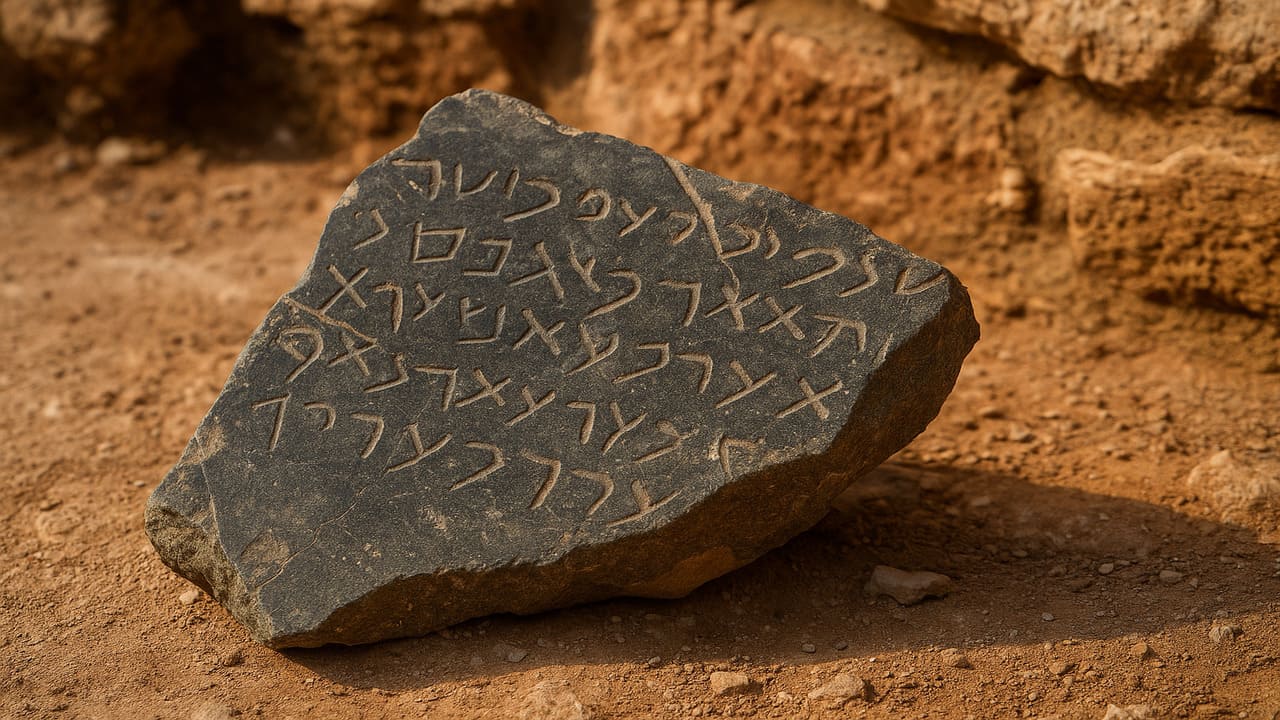
Thorn Ville Church – For centuries, King David stood as one of the most iconic yet debated figures in biblical history. While the Hebrew Bible recounts his triumph over Goliath and reign over Israel, skeptics long questioned whether such a monarch ever existed outside the realm of scripture. That changed dramatically in the early 1990s, when a team of archaeologists uncovered a broken basalt slab in northern Israel. Known today as the Tel Dan Stele, this discovery became the first widely accepted archaeological evidence mentioning the “House of David.”
Unearthed in fragments at the ancient site of Tel Dan, this 9th-century BCE inscription sent shockwaves through both the academic and religious worlds. For biblical archaeology, it marked a watershed moment the moment when history and the Bible converged in stone.
The Tel Dan Stele was discovered during excavations led by archaeologist Avraham Biran in 1993–1994. Located at the foot of Mount Hermon in modern-day northern Israel, the site of Tel Dan has long been associated with biblical events, including the northern kingdom of Israel and the cultic practices introduced by King Jeroboam.
It was in this ancient city gate complex that workers uncovered several fragments of a black basalt stele originally erected as a victory monument by an Aramean king, likely Hazael of Damascus. The fragments, when pieced together, contained an inscription in Aramaic, boasting of military triumphs over Israel and Judah. But what caught the world’s attention was a specific phrase etched in stone: “bytdwd”, translated as “House of David.”
Also Read : Spirits of Old Changi: Singapore’s Most Famous Haunted Hospital
Prior to the Tel Dan discovery, many scholars argued that King David was a mythological or literary figure, similar to King Arthur. The absence of external references to David in ancient records had long been a stumbling block for biblical historicity. The Tel Dan Stele changed that.
The phrase “House of David” indicated not merely a personal name but a dynastic title a political entity grounded in the legacy of a historical king. It confirm that by the 9th century BCE, roughly 100–150 years after David’s presume reign, the kingdom of Judah was still being recognize by its enemies as belonging to David’s lineage.
This single phrase became one of the most significant confirmations of a biblical king ever uncovered.
The Tel Dan Stele fits within a broader geopolitical narrative of the ancient Near East. The Aramean king possibly Hazael claims victory over both the kings of Israel (possibly Joram) and Judah (possibly Ahaziah), echoing events described in 2 Kings 8–9.
The stele’s militaristic boast reflects a time of frequent regional warfare, where smaller kingdoms like Israel and Judah often clashed with Aram-Damascus and other neighbors. That the king of Aram referred to Judah as the “House of David” underscores the enduring identity and perceived legitimacy of David’s dynasty in regional politics.
This contextual alignment not only supports the authenticity of the stele but deepens our understanding of how David’s legacy persist and was acknowledge even among his enemies.
Also Read : The Mount Ebal Controversy: Between Biblical Claims and Archaeological Evidence
While the Tel Dan Stele is widely accept, debates continue about certain interpretations. Some scholars questioned whether “bytdwd” could refer to a place rather than a person. Others have argued over the identity of the king who authored the inscription.
Despite these discussions, a scholarly consensus has emerged recognizing the stele as genuine and its reference to David’s dynasty as authentic. The Israel Antiquities Authority and most major archaeological institutions accept its implications for biblical history.
Moreover, linguistic analysis strongly supports that the Aramaic phrasing “House of David” is consistent with other Semitic references to ruling dynasties such as “House of Omri” used for the kings of Israel.
While the Tel Dan Stele is the earliest know reference to David, it is far from the only discovery linking archaeology to the Bible. Excavations at Jerusalem’s City of David, inscriptions from Mesha Stele in Moab, and discoveries at Hazor and Lachish have added context and complexity to our understanding of the biblical world.
These finds don’t merely support scripture they enrich it. They ground stories once confined to faith in the bedrock of history and offer a shared point of exploration for people across religious and academic boundaries.
Thorn Ville Church - A recent gathering witnessed a spontaneous healing where a longtime member recovered from chronic arthritis after…
Thorn Ville Church - The discovery of the Pilate Stone in 1961 shattered the long-standing skeptical consensus that Pontius Pilate…
Thorn Ville Church - Recent studies by the American Psychological Association indicate that individuals who integrate spiritual disciplines into their…
Thorn Ville Church - The definition of a miracle within the modern religious landscape is shifting from the supernatural to…
Thorn Ville Church - The 2005 discovery beneath an Israeli prison near Megiddo fundamentally challenged the academic consensus on early…
Thorn Ville Church - In an age where digital distractions compete for every second of attention, the practice of scripture…